ABOUT
Sarara Camp is a community-owned and Samburu-managed safari lodge where tourism directly supports wildlife recovery, local livelihoods and conservation across Namunyak Community Conservancy.
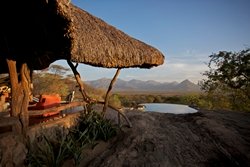
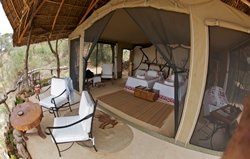
Set on the lower slopes of the Mathews Mountains, Sarara Camp is a community-owned, Samburu-managed ecolodge overlooking Namunyak’s 850,000-acre wilderness. Six spacious tented suites and a private two-bedroom house offer sweeping views, outdoor solar-heated showers and close encounters with elephants visiting the waterhole. Guided game drives, walks, horseback safaris, cultural experiences and visits to Reteti Elephant Sanctuary combine adventurous wildlife viewing with a direct connection to Indigenous-led conservation and community development in northern Kenya.
Key Highlights
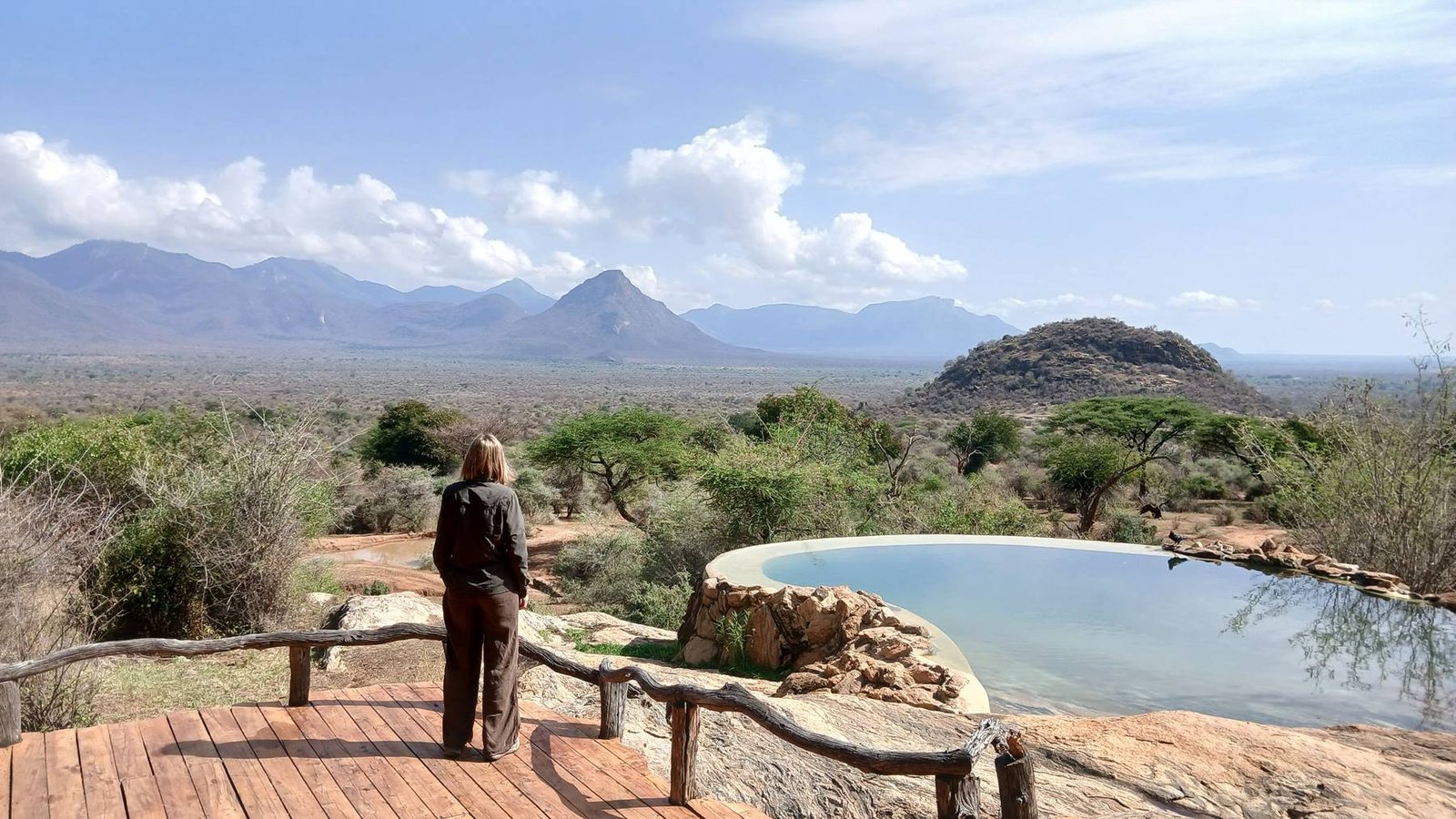
- Elephants at the waterhole – The camp’s infinity pool and open lounge overlook a permanent waterhole regularly visited by elephants, reticulated giraffes, buffalo, kudu and other wildlife.
- Samburu-led experiences – Local hosts and guides interpret the landscape through Indigenous knowledge, wildlife expertise, storytelling and cultural traditions.
- Reteti Elephant Sanctuary – Guests can visit the world’s first Indigenous, community-owned African elephant sanctuary and learn how orphaned calves are rescued, rehabilitated and returned to the wild.
- Varied activities – Experiences include unrestricted day and night game drives, walking safaris, mountain hikes, horseback riding, trail running, birdwatching and fly camping.
- Direct community impact – Accommodation levies and tourism revenue support employment, conservation, education, healthcare, women’s enterprise and rangeland restoration across Namunyak.
Seasonality
Sarara is warm throughout the year. January to March and June to October bring drier conditions and easier wildlife viewing, while the rains transform the landscape and attract birdlife. The camp normally closes from 1 November to 1 December. Wildlife remains rewarding in every open season, especially around water sources.
Experience Types
DETAILS
ACCESS & LOGISTICS
The most direct option is a private charter flight from Nairobi’s Wilson Airport to Namunyak Airstrip. Transfers between Namunyak Airstrip and Sarara Camp are included and usually become an introductory game drive.
Scheduled Safarilink and AirKenya flights operate to Kalama Airstrip, followed by an approximately 90-minute road transfer to Sarara. Guests can also fly to Lewa, from where the drive takes around three and a half hours.
Road and airstrip conditions can be affected by seasonal rain, so transfer arrangements should be confirmed when booking.
CONSERVATION CREDENTIALS
CONSERVATION PARTNERSHIPS
Namunyak Community Conservancy
Sarara operates within the 850,000-acre Namunyak Community Conservancy, established by the Indigenous Samburu community in 1995. The conservancy protects the Mathews Range watershed, wildlife habitat, migration routes and grazing resources while maintaining community ownership of the land. Namunyak is unfenced, allowing elephants and other wildlife to move between the Mathews Mountains and surrounding northern Kenyan ecosystems.
The Sarara Foundation
The Sarara Foundation integrates conservation, education, healthcare and enterprise development across Namunyak. Its mission is to help the Samburu community protect its culture, land and biodiversity while creating sustainable livelihoods and access to essential services.
Reteti Elephant Sanctuary
Reteti is the world’s first Indigenous, community-owned African elephant sanctuary. The Sarara Foundation is its operating partner. The sanctuary rescues orphaned and abandoned elephant calves, attempts to reunite them with their families where possible, and prepares those requiring long-term care for eventual release into the wild. Reteti recruits its keepers and staff from the surrounding Samburu community and was among the region’s first wildlife organisations to employ women as elephant keepers.
Northern Rangelands Trust
Namunyak is one of the founding community conservancies associated with the Northern Rangelands Trust. NRT provides participating conservancies with support in governance, ranger operations, wildlife protection, natural-resource management, peacebuilding and enterprise development.
SUPPORT PROVIDED
Accommodation levies and income from Sarara’s ecolodges help finance Namunyak’s conservation work, community employment, rangeland management and social programmes. Tourism also provides an economic reason to retain land for wildlife and keep important migration routes open.
Sarara provides employment, transport, accommodation, administration, communications and logistical assistance to conservation and community teams. The organisation supports rangers, teachers, healthcare workers, elephant keepers, naturalists and programme coordinators drawn predominantly from the Samburu community.
Camp vehicles and staff can also help connect remote settlements with mobile education and healthcare services.
GUEST CONTRIBUTIONS
Stay at Sarara Camp
Accommodation levies and tourism revenue support Namunyak Conservancy, local employment, wildlife protection, education, healthcare and rangeland restoration.
Pay the conservancy levy
Access to Namunyak is funded through the camp’s applicable accommodation or conservancy charges. These may be incorporated into the safari price rather than displayed as a separate national-park fee.
Donate to The Sarara Foundation
Guests can make one-off or recurring donations, give through corporate matching schemes or discuss legacy gifts. Donations can be directed towards education, healthcare, conservation or enterprise development.
Adopt a Reteti elephant
Symbolic adoption provides ongoing financial support for the care and rehabilitation of orphaned calves.
Purchase Samburu beadwork
The camp gift shop sells items produced by local women. Purchases provide income while supporting the continuation of Samburu artistic traditions.
Choose community-led experiences
Beading sessions, manyatta visits, Ngoma performances, blacksmith demonstrations and Singing Wells experiences generate income and create opportunities for Samburu people to present their culture on their own terms.
Buy locally produced goods
Purchasing Samburu honey and other appropriately sourced products supports small-scale community enterprises.
CONSERVATION VISITS
Visit Reteti Elephant Sanctuary. This activity can be arranged through the camp. A minimum donation is requested to help fund elephant milk, veterinary care, keepers, rescue work and rehabilitation.
LOCAL EMPLOYMENT
Sarara’s camps are driven and managed by members of the local Samburu community. The majority of staff come from communities surrounding Namunyak and speak Samburu and Swahili, while guest-facing team members also speak English.
The wider Sarara organisation states that its three community-owned ecolodges employ approximately 125 local people, while its tourism, conservation and social programmes collectively support more than 200 Indigenous Samburu employees.
Training and career development enable local staff to progress into guiding, management, hospitality, teaching, healthcare, ranger and conservation roles.
COMMUNITY PROJECTS SUPPORTED
Through The Sarara Foundation, Sarara Camp supports mobile maternal and paediatric healthcare, community-led Montessori education, women’s enterprise and conservation across Namunyak. The Milk to Market programme pays Samburu women for goat milk supplied to orphaned elephants, while beadwork sales create further income. Tourism also funds local employment, rangers, wildlife monitoring, rangeland restoration and Reteti Elephant Sanctuary. Together, these initiatives strengthen livelihoods while helping Indigenous communities protect their culture, wildlife and 850,000-acre landscape for future generations.
COMMUNITY ENGAGEMENT
Visits should be arranged through Sarara Camp before arrival or with the camp managers during a stay. Guests can normally visit Reteti Elephant Sanctuary, meet Milk to Market participants, join a beadwork session or visit a Samburu manyatta.
The camp also promotes introductions to its Nomadic Montessori schools and Mobile Healthcare Programme when these are operational and a visit is appropriate.
ENVIRONMENTAL SUSTAINABILITY
WATER MANAGEMENT
Sarara Camp draws water from a mountain spring and uses solar-heated outdoor showers. In this semi-arid landscape, guests are expected to use water carefully and avoid unnecessary laundry or prolonged showers.
WASTE MANAGEMENT
Sarara has removed single-use plastic bottles and straws, using upcycled glass bottles and bamboo alternatives. Its kitchen avoids cling film, buys condiments in bulk, makes some preserves in-house and uses washable food covers. Paper bin liners and biodegradable cotton buds further reduce plastic, although public information does not detail its recycling routes.
FOOD SOURCING
Meals showcase regional produce with Samburu influences. Sarara says its fresh ingredients come from small-scale Kenyan farmers, while honey is sourced from Samburu gatherers in the Mathews Range. Bulk purchasing, homemade jams and nut butters, reusable containers and a natural charcoal refrigerator help reduce packaging, energy demand and avoidable kitchen waste.
ADDITIONAL INITIATIVES
The Sarara Foundation supports reseeding, erosion control, grazing management and the recovery of degraded rangeland. Earth bunds slow runoff, retain moisture and provide improved conditions for native grasses to regenerate.
CONSERVATION INSIGHT
NATURE & CONSERVATION IN THE VISITOR EXPERIENCE
Guests explore Namunyak on unrestricted game drives accompanied by Samburu guides who explain animal behaviour, tracks, habitats, migration routes and human–wildlife coexistence. Night drives reveal species that are rarely seen during daylight.
Guided walks provide a closer look at plants, insects, birds, animal tracks and traditional uses of the landscape. Longer hikes enter the Mathews Range, where guests may encounter ancient cycads, forest birds, colobus monkeys and De Brazza’s monkeys.
Horseback safaris and trail runs offer additional ways to experience the conservancy without remaining inside a vehicle. The waterhole below camp provides frequent opportunities to watch elephants and other wildlife from the lodge.
A visit to Reteti Elephant Sanctuary explains elephant rescue, specialist feeding, veterinary care, rehabilitation and release. Community experiences, including the Singing Wells, Milk to Market, beadwork, schools and manyatta visits, demonstrate how culture, pastoral livelihoods, tourism and biodiversity conservation are interconnected.
RELEVANT SPECIES
CONSERVATION THEMES
Other: The Travel Green List